Evidence Weather Or Not 320 Kbps Mp3 Download UPDATED
Evidence Weather Or Not 320 Kbps Mp3 Download
1. Introduction
The music industry has been impacted by the effects of digital applied science more than any other arts sector. While digital music sales in the form of MP3 downloads and digital music streaming services have fabricated music instantly available, they have greatly diminished the tactile experience for the consumer and accept express the artist's control over how their work is presented. Sound quality (i.e. the sound bitrate, dynamic range and distortion levels) is mostly poorer than that found on CD or vinyl and supporting content, such as cover art, sleeve notes and credits identifying the performers, producers and engineers, are mostly absent when music is distributed digitally. Meanwhile, the revenue bachelor to support music makers and related arts professionals has decreased, owing somewhat to music piracy and illegal file-sharing on one hand (De Beukelaer, 2014) and modest royalty payments from streaming services on the other (Ellis-Petersen, 2014a).
The music album has perhaps suffered the nearly through the digital revolution. When a complete work such equally this is reduced to merely a serial of digital files that can exist shared or streamed in whatever guild without context, the concept of the album as a rich and coherent statement of the artist's vision ceases to function (Ellis-Petersen, 2014b).
The mobile app is reported to hold the potential to reverse these trends and become the definitive commitment format for music in the adjacent three years (Dredge, 2012). Apps tin can offer a richer, more engaging experience for fans by combining music, video, social media, and interactive features in a single, piracy-resistant parcel. Music formats delivering a richer user feel could potentially drive greater revenues for artists and rights holders.
The research presented here describes a study that seeks to evaluate the potential benefits of album apps to the commercial music industry. In item the objective is to identify methods, technologies and opportunities for maximising and optimising the potential of digital music formats and commercial music sales through digital channels.
Additionally, there is a research objective: to notice new music sales strategies that are aimed at enhancing an artist's connection with their fans. Past addressing this specific objective, the enquiry as well serves to build a knowledge base of music consumers' listening habits and their acceptance of new and time to come technologies and formats for commercial music.
2. Music delivery formats
2.i The compact disc
In 1982, the compact disc (CD) represented the first commercially successful format for digital music delivery to the consumer, bringing a number of new features and opportunities. The standard compact disc holds stereo audio files at xvi-bit resolution and a sample frequency of 44100 Hz, resulting in a streaming rate of 1,411,200 $.25 per 2d or 1411.2 kbps.
Equally a physical grade of music commitment, the CD allows album artwork and additional material to be included with the audio. As with vinyl previously, the anthology artwork and additional liner notes can contain artistic imagery, song lyrics and other texts, producer credits, and details of musicians and studios used on the recordings.
The CD allows non just the audio to exist contained inside the disc, but digital data describing the held audio tin can also be embedded within the disc. This brought the first widespread use of audio metadata and the opportunity for tracks to be uniquely identified on the disc by an International Standard Recording Code (ISRC). The ISRC is a 12 digit code defined by International Standard ISO 3901:2001 and it is particularly useful for tracking artist and characterization copyright and repertoire, radio playback, and mechanical sales information, every bit detailed past the International Federation of the Phonographic Industry (IFPI) (Toulson et al., 2014). The CD itself, therefore, contains a number of digital tracks, represented by binary audio data streams, and a number of binary metadata information fields. The procedure for creating an audio CD main file, which tin can be duplicated at a manufacturing found, provides a level of guaranteed actuality for the artist, record label and manufacturing plant. The Disc Description Protocol (DDP) CD image format, along with a suitable MD5 checksum verification code, ensures that the manufacturer receives the exact audio product provided by the mastering house, every bit it is very difficult for the DDP image to be tampered with following creation.
2.two MP3 and data compressed sound downloads
More recently, music has been sold and purchased as detached digital audio tracks through online stores such equally Apple iTunes and Amazon. The standard delivery format for MP3 and other information compressed audio is 256 or 320 kbps, which is a significantly lower bit rate, and hence audio quality, than the CD. Some loftier–definition audio distributors are nowadays starting to offering digital audio downloads at and above the scrap rate of CD data, however this results in slow download times and a college requirement for data storage. Music sold as MP3 and other digital download formats are very easy to be pirated, with no method bachelor to end people from sharing their music collections.
From a creative viewpoint, the options for an artist attempting to portray a wider artistic vision to their audience is reduced through online sales and distribution. In general, anthology downloads are accompanied past only a single slice of artwork and with no opportunity for song lyrics or producer and performer credits to be included. Furthermore, the sales channels allow and encourage purchasing of private songs, meaning that albums are less ofttimes listened to in the song order which the artist intended. The 'Concept Album' arroyo to curating music, such as David Bowie's The Rise and Autumn of Ziggy Stardust and the Spiders from Mars, is therefore much less impactful when the music is distributed as a data only product.
The MP3 file format does not generally hold the IRSCs despite the capability in metadata. At present, the metadata included inside the CD specification is lost when the tracks are used in a data simply format. Although the sound wave (WAV) file format holds a number of metadata fields in describing the audio data contained (such equally information on sample rate, number of channels represented and resolution) there is no metadata field designated to agree the useful ISRC data. The United kingdom of great britain and northern ireland Music Producers Guild take recently initiated a motility to accept ISRC data embedded within broadcast wave (BWF) audio files and and then allowing the benefits of CD metadata encoding to be bachelor to software only releases (UK Music Producers Society, 2013).
With software simply releases, and for upload to online distribution systems, at that place is petty guarantee of security or validation of accuracy, unlike the DDP and checksum approach for meaty discs. It is very possible that the mastering house might provide mastered and final audio files, which could be tampered with, edited or accidentally corrupted earlier they are uploaded to purchase websites. It is axiomatic that a more secure and standard approach is required where master audio files are uploaded to music distribution websites.
Figure i shows the millions of The states music sales in terms of units and dollars for a number of music formats. Information technology can conspicuously be seen that in 2013 more than music is being sold than ever before, withal the upward tendency of sales is mirrored by a falling trend in terms of revenue. This departure highlights the diminishing economical value of commercial music in the years since digital download sales became prevelant in 2004.

Figure ane: U.s.a. music sales by format (Recording Industry Association of America, 2015).
2.3 Analogue audio – vinyl and audio cassette
Counterpart distribution has macerated with the rising in digital audio. The cassette tape was a successful medium for music delivery for a long period, considering it was small, portable, and more robust than vinyl. The cassette was the starting time convenient format that allowed dwelling house recording and duplication, significant that for the showtime time listeners could compile their own mix tapes. Home recording and duplication has paved the way for music piracy, which has become an even greater concern with the ascent of digital music download services (Sandoval, 2011). It is also interesting to note in Figure 1 that the cassette format disappeared effectually 2004, just as digital download sales start to increment.
Vinyl on the other hand has seen a resurgence in contempo years, possibly equally a consumer backlash to the digital revolution, as shown in Figure two (Dewey, 2013). In 2012 vinyl sales in the U.S. were up 36.two% in dissimilarity to a drop in CD sales of 18.3% and stationary overall industry revenue (Freidlander, 2013). Vinyl is all the same regarded past some every bit the most 'artistic' music format, given the physical size and style, which lends itself to rich artwork and associated texts including vocal lyrics and producer credits. Vinyl is notwithstanding subjectively classed equally a superior audio quality by some, peculiarly with respect to MP3 and information compressed sound, just also with the CD.

Figure 2: Global vinyl sales figures (Dewey, 2013).
two.4 Internet streamed audio
Cyberspace streaming sound services, for case: Spotify, have grown recently, given the increment in net download speeds, which currently allow stereo audio streaming of upwards to 320 kbps. The new model for audio streaming is still in its infancy and it remains to be seen how this method of music delivery will evolve every bit mobile and remote internet access improves. There are issues surrounding royalty payments (Ellis-Petersen, 2014a) and it is still uncertain whether streaming services increment or decrease the likelihood of consumers making direct music album purchases. The conducted research herein is specifically targeted at evaluating commercial music purchase formats, although it is best-selling that new business models are emerging and volition play a meaning role in the near future, particularly with respect streaming subscription services.
2.v Album app
The 'album app' format has emerged, given the ubiquity and processing power of smartphones on iOS, Android and Windows platforms (Bogdan, 2013). Recently Bjork released her Biophilia anthology as an 'app' which tin can be purchased and downloaded to iPhone and iPad devices and incorporating a number of unique graphics and interactivity features. The album app format potentially allows unique artistic and interactive content to exist distributed alongside the audio, which may include artwork, photography, song lyrics, video, blitheness and even interaction and gaming features (Dredge, 2012). The album app is also an attractive method for music delivery because it is relatively secure, i.due east. in one case the app is created it cannot exist tampered with, ensuring that the exact artefact created by the mastering firm is exactly that purchased by the consumer. It is also much more hard to pirate and distribute unauthorised copies of album apps. A number of interesting debates remain to be initiated should the album app format become more ubiquitous and commonplace. In item it is valuable that ISRC information is incorporated also into album app blazon releases, then that correct credits and royalties can exist recorded and managed. If an artist decides to release music exclusively in the anthology app format (i.e. not at all through iTunes, online stores or on CD or vinyl), then the question of how the ISRC data is encoded or recorded will become pertinent. Potentially, professional person album app evolution software could exist enhanced to support the BWF file format, so that music app releases can contain the necessary metadata. A potential outcome with the album app format is that it is not automatically recognised for music sales charts. This will need to be addressed for it to become a commercially viable music commitment format.
three. Research methodology
3.1 Summary of functionality gaps and enquiry objectives
The background enquiry of music formats and electric current listener trends, highlight a number of functionality gaps given the movement from counterpart and physical formats towards digital download platforms. The research methodology is therefore designed to address and evaluate these existing functionality gaps with the aim of proposing an improved user experience for the digital music consumer. It is a paradoxical concept that the accelerate of technology has taken the commercial and creative values of commercial music backwards, seen a reduction in playback quality, and has furthermore opened the door to piracy and security flaws. To summarise: the contemporary digital download platforms, while being portable and assuasive rapid catalogue access to music, fail to deliver the following features that had become valued in physical playback media such as vinyl, cassette and CD:
- Digital downloads take a limited capability to associate album artwork with commercial music.
- Digital downloads do non contain details of songwriter credits, performer credits, producer credits or studio credits.
- Digital downloads provide no admission to song lyrics alongside the purchased music.
- Digital downloads are predominantly depression resolution and inferior sound quality to that of physical media.
- Digital downloads are easily pirated.
- Digital downloads practice not allow ISRCs to exist incorporated alongside the audio data.
- Digital download formats do not utilise whatever DDP blazon security for ensuring quality control between mastering engineers and sales aggregators.
Additionally it has been noted that album apps are non, at present, automatically registered for chart eligibility.
The primary objective of this inquiry is to evaluate the album app format with the aim of developing a new digital music distribution format that fills near if non all of the functionality gaps that are described above. In doing so, the enquiry aims to identify features and technologies that will expand and heighten both the listener and creative person experience with respect to cosmos and sale of commercial digital music.
iii.2 Experimental pattern
The experimental design for this research follows a standard research and evolution methodology, every bit described in Figure 3:

Effigy three: Research and development investigative methodology.
Initially, a number of existing music platforms and album apps were evaluated to identify valuable feature sets and to place the necessary functionality gaps. Stakeholder interviews with music artists, industry representatives and consumer group discussions were utilised to assist and validate the functional design process.
From the research of prior art and stakeholder reviews, a pattern specification was adult past the collaborating organisations Script Inc. and Anglia Ruskin University. All app software development was conducted by Bureau Mobile Ltd with continuous review and validation from Script, Anglia Ruskin, the artist (Francois and the Atlas Mountains) and the creative person's record characterization Domino Records.
The adult anthology app, Piano Ombre by Francois and the Atlas Mountains, was launched for commercial auction by Domino Records at the same time every bit other music formats in March 2014. The original sale cost for the album app was £six.99 in the Apple App Store. The album was also available for sale as a standard digital download purchase in the Apple tree iTunes Music Store for the aforementioned price.
Finally, the album app was demonstrated straight to a number of consumer groups and manufacture stakeholders by the authors, in order to test and evaluate the benefits of the new digital music format.
4. App blueprint through creative review
4.one Artist interviews
A number of music artists (x in full, including Francois Marry of Francois and the Atlas Mountains) were asked to comment on the creative and commercial opportunities allowed by existing music delivery platforms and with respect to the anthology app commitment format. Their personal preferences with respect to music listening and purchasing were likewise discussed.
On the whole, the artists indicated that albums represent a theme, concept or artistic vision which made the album an 'artpiece' or something that is more than than simply the music alone. Most of the interviewed songwriters were actively artistic and artistic in other arts fields too, producing sketches, photography and other supporting artwork for their albums. The artists all said that they would like to add more creative input to their albums, citing: fourth dimension, price and limitations of commitment formats as reasons for not adding as much rich creative content as they would like. Francois reflected that the novel album app format gave him a new framework in which to focus his artistic outputs – creating sketches and interactive features that are a perfect fit for the dimensions and functionality of the commitment device (i.e. the iPhone). The track order of the album was also an important aspect for all interviewees, indicating that the listener experience is high on their agenda and that the tracks lonely grade a consummate package, which should be consumed in a specific fashion. In many cases this is at odds with many emerging listener tools, such equally iPods for continuous random track admission and streaming radio services that play random tracks on a playlist.
Discussing the commercial opportunities of music formats showed that artists are willing to comprehend a number of different formats, though many referred to vinyl and CDs as having an undeniable quality considering of their physicality – non least for selling and signing at gigs and for the tangible experience and physical printed artwork. Many artists referred to the low quality of MP3 formats, and the reduced artwork and creative content, every bit being detrimental and devaluing music, however the benefits of immediate mobile access, portability and simple storage are qualities that are appreciated. In full general it is articulate that a number of formats are of value to artists, as they cater to all audiences, listeners and occasions. Information technology is clear nevertheless that there has previously been no format that gives 'the best of all worlds', which the app may get some style towards delivering.
The artists liked the idea that a digital album app might be dynamic and change over time, assuasive new songs to go available as the album progresses, every bit well as new artwork, news and interactivity. The but negative annotate with respect to this arroyo is that information technology, potentially, allows a project or album to run forever, and there is some creative value in an artistic project having a completion appointment so that it tin exist archived and new projects embarked on.
All interviewees explained that they were keen to include song lyrics and producer credits within an album package or, where that is not possible, on an accompanying website. Many of the artists were enlightened of album apps and accompanying apps and appeared to exist intrigued and interested in the format. Regarding the question of future trends and consumer preferences, a number of different responses were seen. It appears therefore that the artists themselves are unsure or divided on what the future might hold, which could signal that there are currently opportunities for new innovations and strategies to exist developed for the commercialisation of our future music.
4.2 Consumer feedback on music ownership preferences
A number of consumers were asked to complete questionnaires at the creative evaluation stage, to understand the demographic of the music buying public. In total 85 music consumers were asked to requite quantitative feedback on a number of discussion points. The participants were all staff and students of Anglia Ruskin Academy (UK) with an age range betwixt xix and 50, and a hateful average age or 23.0.
Figure 4 shows that YouTube was referred to equally the most mutual source for new music discovery, implying that consumers are fatigued to rich acoustic media, i.eastward. the video alongside the music, rather than just the music alone. Figure v shows the range of music formats, which the participants embrace. A surprising issue here is the meaning number of participants who purchase music in vinyl and high resolution formats. It must be noted that a proportion of participants were students enrolled on music degree pathways, merely nevertheless, it is clear that college-experience music delivery formats are embraced by some consumers. For the questions shown in Figure iv and 5, participants were asked to choose ane of three options for each category: 'Regularly', 'Sometimes' and 'Never'. These scores were weighted 1, 0.5 and 0 respectively to give a normalised score between 0 and 100% for each category.

Effigy iv: How the consumer cohort learn about new music.

Figure 5: Music formats purchased by the cohort.
Other than the music itself, participants also indicated their loftier interest in anthology art, band photography and production and performer credits, as shown in Figure 6. For the question shown in Figure 6, participants were asked to cull ane of 3 options for each category; 'Very Interested', 'Sometimes Interested' and 'Rarely / Non Interested'. These scores were weighted 1, 0.5 and 0 respectively to give a normalised score between 0 and 100% for each category.

Figure 6: Values and interests attached to a purchased music album.
Pianoforte Ombre by Francois and the Atlas Mountains
The developed album app Piano Ombre is designed to provide a digital music anthology experience that maintains the rich visual media and boosted artistic content that would be expected in an counterpart sleeve, and much more than as well. The listener can play the anthology while browsing vocal lyrics, product credits, photographs, biographies, artwork, animations, and can also access sectional studio outtakes and B-side tracks.
Visually the app takes its cues from the artwork for the album's other release formats, using the album's encompass photograph prominently and repeating its circle motif in the circular icons found throughout the app. Effigy vii shows the album cover, the principal user interface and the anthology tracklist. In the Francois app, the tracklist can only be played continuously in list society, unless the listener actively selects new tracks manually. From the album playlist the user is too able to engage a 'download to library' feature. If the user selects this option and inserts their email address, the audio, as both MP3 and high-resolution wave sound files, are made available for download to a personal computer and hence a digital music library such as iTunes. This feature likewise triggers an official sale registration, which tin can be reported straight by the record label equally an official chart sale.

Figure 7: The master opening screen, carte screen and anthology tracklist.
Additional materials, including paw-drawn animations, a journal/sketchbook and candid behind-the-scenes photographs, were supplied by the ring, as shown in Figures 8 and 9.
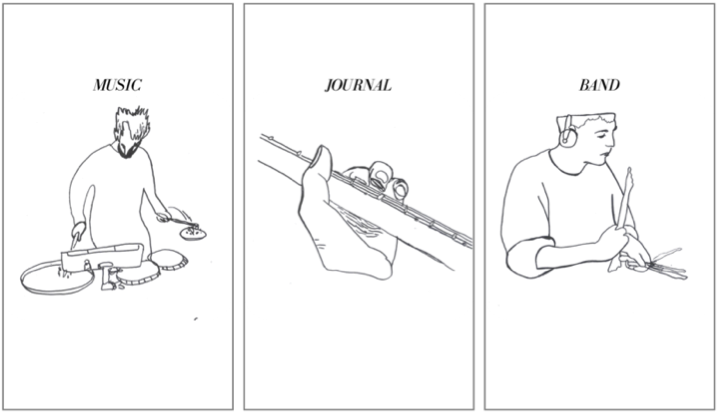
Figure 8: Manus drawn animations appear as loading screens.
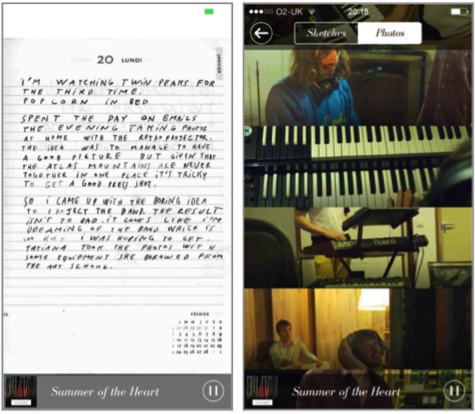
Figure 9: An instance journal entry and the band photos section.
Album tracks are presented side-by-side with notes from the composer, lyrics in French and English and an choice to brandish guitar chords. The lyrics and chords scroll automatically to keep in time with the track being played (come across Figure 10).

Figure ten. The track play screen with additional content including song description, lyrics and guitar chords.
The 'Band' section provides a listing of tour dates with the selection to buy tickets, a ring biography and a listing of album credits equally shown in Figure 11. An 'Extras' department presents links to the band's Twitter and Facebook pages, video playlists, the Domino Recording Company spider web shop and a newsletter sign-up selection.
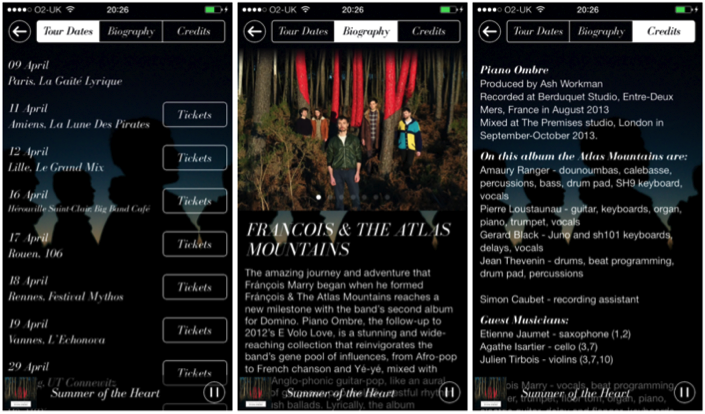
Figure 11: The ring details section with bout dates, biography and anthology credits.
Finally, the Sun Tracker (shown in Figure 12) is a unique feature that ties in with the album's themes and imagery. It encourages the user to aim their device's camera at the sun, or to locate information technology using the device'southward integral gyroscope and compass if indoors. A crimson circle so appears, allowing the user to accept a photo earlier applying photograph filters and either saving it or sharing it online. The Sun Tracker feature then unlocks 1 of 24 bonus tracks, one for each hour of the twenty-four hours.

Effigy 12: The Lord's day Tracker and bonus music section.
It must be noted that this particular implementation of the anthology app was oriented to the artistic preferences of a single artist, i.e. Francois and the Atlas Mountains. At that place are many other features that can exist implemented in the album app at the discretion of the artist, label and app design. For instance: features such as random and repeat play can be implemented, equally can features that let the app audio to integrate with other applications and libraries on the device.
5. Consumer response
v.1 Consumer feedback on the album app
Sit-in sessions were held at Anglia Ruskin Academy during March and Apr 2014. Cohorts of students from arts and technology pathways were given a brusk presentation on the history and potential of music delivery formats. The participants received a demonstration of the Francois and The Atlas Mountains App and asked to signal which features they found of interest. A full of 65 participants gave quantitative feedback during the consumer demonstrations. The participants were all staff and students of Anglia Ruskin University (UK) with an age range between 19 and 55, and a mean average age or 23.2.
For all questions, participants were encouraged to place if they were 'Very Interested', 'Interested', or 'Not Interested'. The questionnaire results are weighted ane, 0.5 and 0 respectively and used to calculate a normalised percentage score out of 100, where a maximum score of 100 indicates that all participants were 'Very Interested'. A score of 0% indicates that all participants were 'Not Interested'.
It can be seen in Effigy thirteen that well-nigh all interviewees liked the album app format because of its ability to provide a mechanism for accessing high quality versions of the audio; scoring this feature at 88%. Information technology is also evident that the additional creative content aspects of the app, such as appearance, song lyrics, guitar chords, access to exclusive content, imagery and product details all scored over lx%; highlighting a meaning interest from the music buying public. A regularly updated periodical and links to social networking pages were of less involvement but yet scored between 40-fifty%.

Figure 13: Specific responses to the Francois and the Atlas Mountains album app.
Having as well conducted consumer evaluations prior to the album app being created, it was possible to meet the deviation between the audition'due south perception of an idea or concept and how they perceived a real case written report and demonstration. As shown in Figure xiv: prior to being shown an case of the anthology app, only 34% of participants indicated that they would purchase music in this class. However, 77% of the group that were given a demonstration of the app before being asked the question responded that they would buy music in this format.
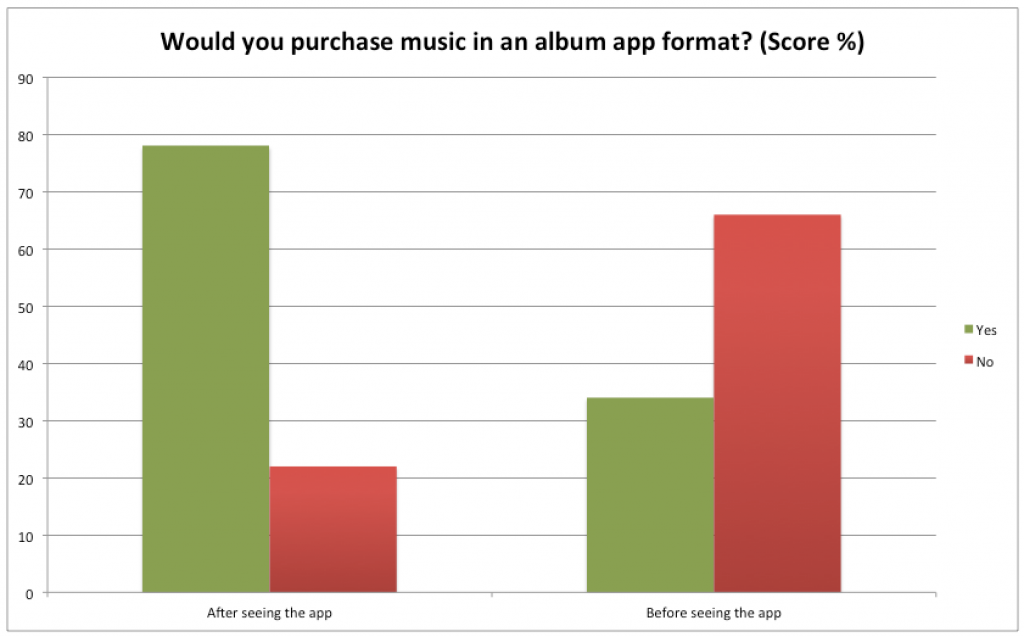
Figure 14: Consumers' response both before and after seeing the anthology app demonstration.
In terms of qualitative feedback, the accomplice additionally expressed interest in farther possibilities of the album app format, questioning whether information technology could facilitate a total music score too every bit guitar chords. Participants were also interested in whether the app could provide a way to find other related acts, perhaps on the same record characterization. Some concerns were expressed over where album apps will 'alive' on the device and how they will exist organised – highlighting the need for a 'virtual CD cabinet' type application on the device. Individuals were conspicuously aware of the limited capacity of their mobile devices and expressed concerns over the information size of the app.
A number of agile musicians in the accomplice were interested in the cost of development and were concerned that the (relatively) high toll of developing an app would mean that it was not an selection for smaller acts and semi-professional artists.
v.2 Manufacture stakeholder interviews
Stakeholder interviews with industry professionals were conducted in gild to assemble opinions on the album app – the concept, the app itself and the potential for future development – and gauge the subjective success of the project. Key figures from the music industry were selected to give a representative view from the perspectives of music publishing, music licensing and the record labels. The stakeholders interviewed were from organisations including Sony ATV Music Publishing, Warner Chappell Music Publishing, Parlophone Records, Domino Records, the UK Music Producers Club and PRS for Music.
The fact that the Piano Ombre album app is nautical chart-eligible was noted as a positive footstep, peculiarly by the record label representatives, who saw it as a significant accomplishment. Nevertheless, it was felt that the option within the app to download the anthology onto the device – which redeems the song files from the band's record label and registers a auction with the charts – was not fairly highlighted and incentivised. A prompt to encourage the user to download the files when they first open up the app was suggested.
The range of features offered by the app was well-received, in particular the inclusion of exclusive content not available online or elsewhere, which was seen as an artistic and commercial advantage for the format. Exclusive tracks, videos, lyrics and guitar chords were among the features specifically mentioned. It was by and large felt that a media-rich app with this kind of additional content could offer sufficient added value to justify the purchase price. Several stakeholders expressed the opinion that the album app may remain a more niche, rather than general, release format. To many, the album app represents a "deluxe format for the uber-fan". In other words, a consumer might exist drawn to the actress features and functionality offered by an app-format album released by their favourite creative person, but would even so purchase the majority of their music in conventional formats.
One interviewee indicated that the format could discover particular success with fans of heavy rock and metallic acts, who are generally very active in purchasing additional content including live DVDs and guitar tablature books. Another interviewee felt that a state of affairs might arise where such an artist and their management might even be willing to finance or function-finance a potentially loss-making anthology app in order to cement the artist'southward positioning every bit an innovator. Another potential scenario discussed, was to use the anthology app every bit a pre-release portal, providing information and content in the stitch to a major album launch, then offer the user an incentivised album purchase. Information technology was felt that this concept has definite potential, although the verbal offering, incentives and pricing structure require further idea.
All of the stakeholders interviewed had strong views on how the content of whatsoever future album apps should exist licensed. The consensus was that a new licensing template should be established for album apps, thereby avoiding the need to negotiate individual deals with dissimilar rights holders for each app released. The primary issue surrounds the inclusion of lyrics, guitar chords and sheet music – the so-called lyric and graphic rights. While existing PRS structures should exist able to administer the mechanical and performance rights (respectively, the right to reproduce the work in a specific format and the right to perform the piece of work in public, including downloading information technology from the internet), the lyric and graphic rights are handled separately.
In order to account for the extra rights exploited by the album app format, an uplift in the royalty payments administered by PRS for Music would seem to be preferable to directly accounting betwixt label and publisher. Not just would this simplify the process, but it could avert whatsoever legal issues with the major digital distributors, such as Apple, who require a signed agreement stating that all of the textile contained inside the app is the belongings of the app publisher (in this case, the record characterization).
6. Conclusions and hereafter opportunities
The format of the anthology app as a credible digital music format has been developed and tested in a live scenario for the very beginning time. The app Pianoforte Ombre by Francois and the Atlas mountains is as well the first chart eligible music app in the world, so this is a pregnant and valuable step forward.
In evaluating participant responses at consumer and stakeholder review meetings, the well-nigh impactful features are the inclusion of artwork, song lyrics, producer credits, guitar chords and the ability for the musical content to be a dynamic portal for discovering sectional music material. Additionally, the opportunity to employ the app every bit a portal for accessing high definition versions of the audio was also very well received. Additionally, the enhanced security with regards to piracy and quality control at the distribution stage is unique to the app every bit a digital download format. This project has shown a method for expanding both the artist'south and consumer's feel when engaging with commercial digital music. For artists the app allows them to add a greater artistic vision to the anthology and maintains the artistic focus on the album as a packaged art piece in a digital context. For consumers there is an enhanced feature set, merely likewise a greater connectivity and understanding of the creative vision of the release.
It was valuable to detect the consumer accomplice'southward perception of the album app prior to and after seeing a demonstration. On word alone, only 34% of participants were excited past the anthology app concept prior to its evolution only this rose to 77% when they saw the app functionality directly. This highlights an intriguing claiming for technical innovators in the creative industries, in that consumers may have a degree of apathy with respect to new technologies and methods at the concept development stage. Until the new technology is built and tin be demonstrated, it can potentially be rejected.
The music industry representatives saw the album app every bit a viable time to come music format, merely were hesitant to regard it every bit a definite trend for the future. Information technology was regularly discussed that a 'perfect storm' or a coming together of the right artist with the right album and but the right digital context at the right time, would well-nigh likely be required to push the album app as a new, principal, digital format. If this could be achieved with a huge internationally regarded artist, the music industry could change considerably in simply a curt space of fourth dimension.
At present the price of developing an album app is prohibitive to independent and unsigned bands, simply, as with all new technologies, the toll would reduce considerably with ubiquity. For larger multi-tape selling artists, the toll of app development is quite small and could encounter a lucrative additional income stream for music releases. Additional proof of market testing is required with the anthology app format, and the authors are currently pursuing opportunities to develop a 2nd case study assay with a number of music artists. Bringing a new commercial music format to the public requires a substantial marketing upkeep but with sufficient investment in place it would be possible to compare the change in sales and revenue patterns between the album app and conventional music release formats. For example: it is envisaged that dynamic musical content, which can be pushed to the app later on the sale date, can extend the height-sales life of a released album and prolong its shelf life, in dissimilarity to the majority of sales profiles which see most anthology sales within the get-go 1 or two weeks subsequently release.
Although a relatively modest study, the research conducted here indicates that the time to come for album apps is positive. Indeed Paul McCartney recently re-released five of his solo albums as anthology apps (Dredge, 2014). It is suggested withal that more larger scale research be conducted in order to quantify more significantly whether the album app format is probable to be embraced fully past consumers. In June 2014, Bernhoft Islander released his self titled album as an app and includes interactive features that allow the listener to manipulate the rest and panning of the mix and to experiment with looping sounds and phrases (Greeves, 2014). This approach to more interactive digital music has likewise been experimented with earlier by Bjork, Peter Gabriel and Gwilym Gold, and these could deliver the extra functionality required to entice music consumers to explore music in a more immersive manner. The use of interactive musical content was discussed during the artist consumer groups in this research, and the response was clearly divided between those embracing the idea and others who suggest that music should exist heard in one way just – 'every bit the artist intended'. Regardless of the split opinion on interactive music applications, one affair is certainly clear: digital platforms for music sale are not currently providing the rich user experience that volition encourage listeners to pay for the music they consume. However a new digital platform, anthology apps or potentially some other innovation, are on the horizon and the commercial music manufacture can expect to see the methods of auction and consumption evolve in the very almost future.
Acknowledgements
This inquiry was supported by the Digital R&D Fund for the Arts, with funds provided by NESTA Arts & Humanities Research Quango, Arts Council England and public funding by the National Lottery.
References
Bogdan, G. (2013). Is the music album app the next game changer. The Guardian. Available from http://www.theguardian.com/media-network/2013/aug/21/music-album-app
De Beukelaer, C. (2014). Music Piracy: a Rich but Narrow History, Cultural Studies, April 2014, pp. i-3.
Dewey, C. (2013). Vinyl record sales have hit their highest point since 1997. Available at http://www.washingtonpost.com/blogs/manner-blog/wp/2013/04/11/vinyl-records-are-more-popular-now-than-they-were-in-the-late-90s/
Dredge, S. (2014). Paul McCartney re-releases five of his classic album albums as iPad apps. Available from: http://www.theguardian.com/technology/2014/jul/xvi/paul-mccartney-ipad-apps-albums
Dredge, S. (2012). Music apps are the new albums. The Guardian. Bachelor from http://www.theguardian.com/technology/appsblog/2012/nov/07/music-apps-david-gilmour-lady-gaga
Ellis-Petersen, H. (2014a). Taylor Swift takes a stand over Spotify music royalties , The Guardian, 05 November 2014, available at http://www.theguardian.com/music/2014/november/04/taylor-swift-spotify-streaming-album-sales-snub
Ellis-Petersen, H. (2014b). Anthology spins closer towards its final track every bit a viable format, The Guardian, 29 July 2014, http://www.theguardian.com/music/2014/jul/29/album-music-format-streaming-playlists-extinction
Friedlander, J. (2013). News and Notes on 2012 RIAA Music Manufacture Shipment and Revenue Statistics, The Recording Industry Association of America. Available from http://76.74.24.142/06D7FA0A-8ADD-1A14-F7E1-ED630E697E9E.pdf
Greeves, D. (2014). Can The App Save The Album? Sound On Sound Magazine, Oct 2014.
Recording Industry Clan of America (2015). United states music sales by format, available from http://riaa.com.
Sandoval, G. (2011). What's Driving Rise in Music Sales? CNET.com. Available from http://news.cnet.com/8301-31001_3-20077981-261/whats-driving-ascent-in-music-sales/
Toulson, Due east. R., Grint, B. & Staff, R. (2014). Embedding ISRC Identifiers in Broadcast Wave Audio Files, In: Innovation In Music, Future Technology Printing, Dec 2014.
U.k. Music Producers Society (2013). Credit Where Credit Is Due. Available from http://www.creditisdue-mpg.co.uk
Album app examples
Francois and the Atlas Mountains "Pianoforte Ombre"https://itunes.apple tree.com/gb/app/pianoforte-ombre/id840099884?mt=eight
Bjork "Biophillia"https://itunes.apple.com/gb/app/bjork-biophilia/id434122935?mt=8
Paul McCartney and Wings "Band on the Run"https://itunes.apple tree.com/gb/app/band-on-run-paul-mccartney/id723450958?mt=viii
Bernhoft Islander "Bernhoft Islander" https://itunes.apple.com/gb/app/bernhoft-islander/id870484538?mt=8
DOWNLOAD HERE
Posted by: barnettfrouss.blogspot.com

Post a Comment for "Evidence Weather Or Not 320 Kbps Mp3 Download UPDATED"